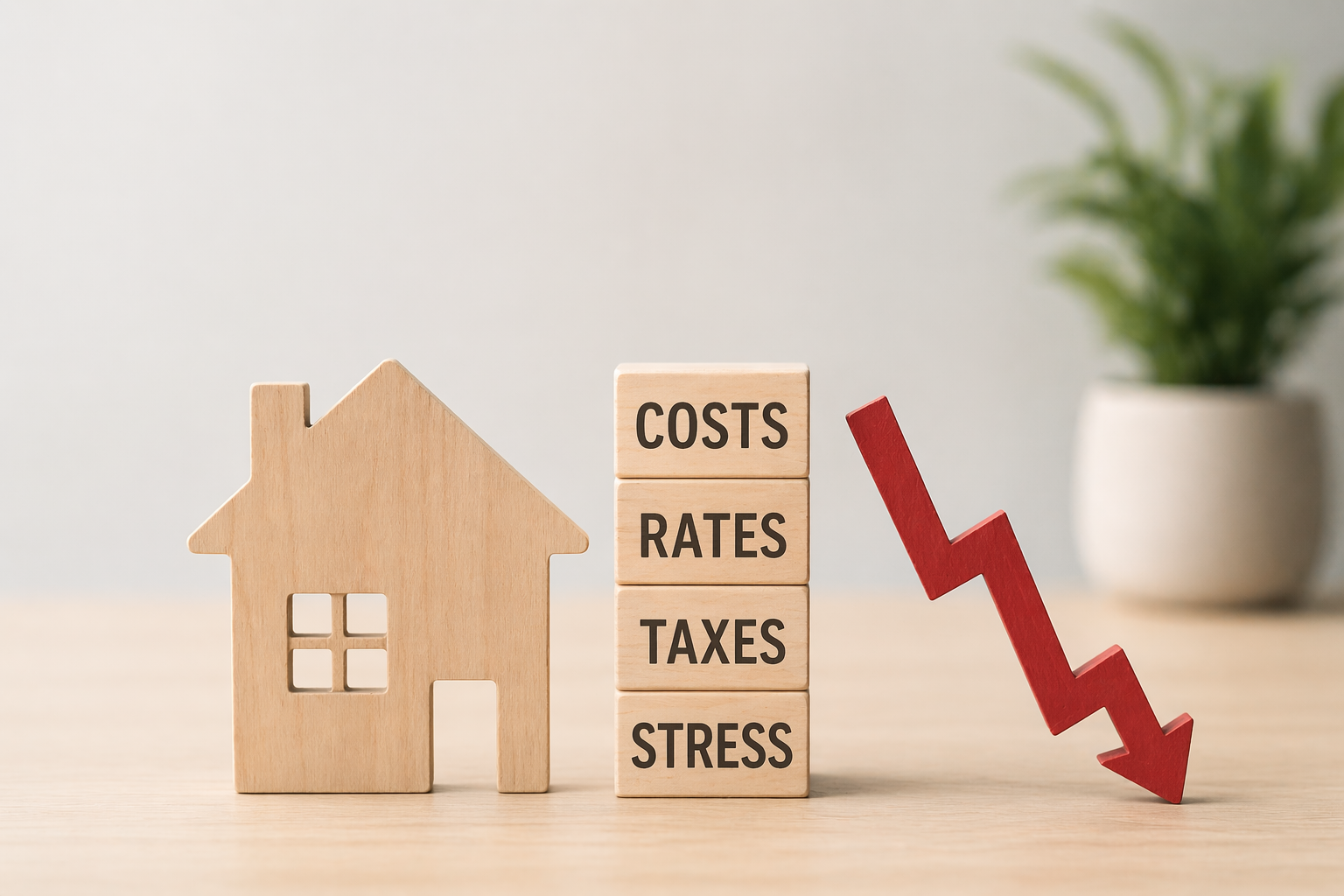
If you’ve been feeling the pressure of homeownership more than usual lately, you’re not alone—and more importantly, you’re not without options.
The 2026 housing market isn’t defined by a single problem. It’s a combination of pressures that can quietly build over time until they feel overwhelming. But once you understand what’s happening, you can start taking control.
Understanding the “Snowball Effect”
Many homeowners today aren’t struggling because of one major financial mistake. Instead, it’s what can best be described as a “three-headed monster”—a combination of rising costs and limited flexibility.
The Cost of Ownership Crisis
For years, the mortgage was the main bill homeowners worried about. That’s no longer the case.
Today, the true cost of owning a home includes:
- Rising homeowners insurance premiums
- Increasing property taxes
- Higher utility and maintenance costs
Even if your mortgage hasn’t changed, everything around it has—and that adds up fast.
The Exit Barrier
In the past, homeowners had a built-in escape hatch: refinancing.
If times got tough, you could refinance into a lower rate or extend your loan term to reduce monthly payments. In 2026, higher interest rates have largely closed that door.
Many homeowners now feel “locked in”—unable to lower their payments and hesitant to sell because buying another home would mean taking on a much higher rate.
The Post-Protection Era
During the early 2020s, many homeowners were protected by forbearance programs and temporary relief measures.
Those programs are now gone.
Lenders have returned to standard timelines and procedures, which means missed payments are taken more seriously—and acted on more quickly—than they were just a few years ago.
Myth vs. Reality: What Homeowners Need to Know
When stress builds, misinformation can make things feel worse than they are. Let’s clear up some of the most common fears.
Myth: “I’m one payment behind, so the bank is coming for the keys.”
Reality: Most lenders cannot even begin the foreclosure process until you are 120 days delinquent.
This period is often called your “Golden Window.” It’s time you can use to communicate, explore options, and find a solution before legal action begins.
Myth: “Foreclosure is my only choice if I can’t pay.”
Reality: In many cases, it’s not.
Because home values remain relatively strong in many areas:
- You may be able to sell your home and pay off the loan
- If you owe more than it’s worth, a short sale can help reduce long-term credit damage
Foreclosure is typically the last resort—not the first.
Myth: “The bank wants to own my house.”
Reality: Banks don’t want your home—they want your payments.
On average, lenders can lose tens of thousands of dollars on a foreclosure. That means they are often willing to work with homeowners who are proactive and communicative.
Myth: “If I ignore the mail, it will buy me more time.”
Reality: Ignoring the situation is the fastest way to lose control.
Those letters often contain access to loss mitigation programs, payment plans, or modification options. The sooner you engage, the more choices you’ll have.
Your Action Plan: First Steps to Take Right Now
If you’re feeling behind—or worried you might fall behind—here’s how to move forward with clarity.
Step 1: Open the Mail
It sounds simple, but it’s critical.
Learn to recognize the difference between:
- A late notice (early warning)
- A Notice of Default (formal escalation)
Understanding where you stand is the first step to solving the problem.
Step 2: Make the “Humble Call”
Reach out to your lender’s Loss Mitigation Department as soon as possible.
This isn’t about admitting defeat—it’s about opening the door to:
- Payment plans
- Loan modifications
- Temporary relief options
The earlier you call, the more flexible those options tend to be.
Step 3: Check Your Equity
Even in a challenging market, many homeowners still have equity.
Speak with a local real estate professional to determine:
- What your home could sell for today
- Whether selling could fully cover your mortgage
- If it could give you a financial reset
For many, this becomes a powerful “exit strategy” rather than a last-minute decision.
Step 4: Talk to a Professional (For Free)
You don’t have to figure this out alone.
HUD-approved housing counselors offer free guidance and can help you:
- Understand your rights
- Review your options
- Create a plan tailored to your situation
You Have More Control Than You Think
The 2026 housing squeeze is real—but it’s not hopeless.
What feels like a sudden crisis is often the result of gradual pressure building over time. And just like it builds step by step, it can be addressed step by step.
The key is early action and clear information.
You’re not just reacting—you’re making decisions. And with the right approach, those decisions can protect your home, your credit, and your future.